Modiran Tahlilgar Sepahan Modiran Tahlilgar Sepahan

Select your language

  • English (UK)
  • persian (fa)
  • arabic (ar)
  • Home
  • Products
    • livestock management software
    • Actual Cost Software
    • Nutrition Management Software
    • Hoof trimming Software
    • Mastitis control software
    • Herd combining software
    • Antivirus Aviva
    • Co-op members software
    • Information aggregation server
    • Sam Software
    • Rose Reporting System
    • Sheep and goat Management Software
    • Agriculture software
    • modiran software
    • fattening software
    • rayan software
  • Customer list
  • News
  • Articales
  • Home
  • Products
    • livestock management software
    • Actual Cost Software
    • Nutrition Management Software
    • Hoof trimming Software
    • Mastitis control software
    • Herd combining software
    • Antivirus Aviva
    • Co-op members software
    • Information aggregation server
    • Sam Software
    • Rose Reporting System
    • Sheep and goat Management Software
    • Agriculture software
    • modiran software
    • fattening software
    • rayan software
  • Customer list
  • News
  • Articales

Articales

What Is Smart Livestock Farming? And Why Should Iran Move Toward It?


Summary

Iran’s livestock industry is facing growing challenges related to production costs, product quality, exports, and the efficient use of resources and operational processes. Following the Fourth Industrial Revolution (Industry 4.0), technology has advanced to a level where even complex production processes can be managed through simple, scalable, and data-driven solutions.

Smart Livestock Farming is the integration of standardized data, the Internet of Things (IoT), and Artificial Intelligence (AI) into herd management, livestock production, feeding, and workforce management. These technologies should not be considered optional tools, but rather as the infrastructure required to enhance competitiveness and reduce production costs.


Challenges Facing Iran’s Livestock Industry

The livestock sector in Iran is currently confronted with several major challenges, including:

  • High production costs and increasing pressure on producers’ profit margins.
  • The need to build trust in product quality and expand exports to international markets.
  • Improving efficiency in two key areas:
    • Resource consumption (water, electricity, fuel, etc.)
    • Production structures and operational processes (from farm to factory)

Traditional approaches, such as increasing physical investment without relying on data, often result in higher costs without guaranteeing systematic improvements. In contrast, Industry 4.0 has demonstrated that the combination of automation, data, and analytics can simultaneously reduce costs and make quality measurable and fully traceable.


A Key Principle: Without Data, a Technology Ecosystem Cannot Be Built

To solve the challenges of the livestock industry, technology companies must be encouraged to enter this sector. However, three fundamental prerequisites are entirely data-driven:

  • Attracting data and analytics specialists
  • Attracting investment in livestock technologies
  • Encouraging technology companies to develop solutions for the livestock industry

Without standardized, shareable, and interoperable data, all three objectives become slow, difficult, and costly. Investors are reluctant to accept risk, data specialists cannot create value without a proper data foundation, and technology companies cannot build scalable solutions without APIs and standardized data models.


What Is Smart Livestock Farming?

Smart Livestock Farming is a collection of technologies and solutions that leverage real-time data and modern technologies—including IoT, Edge Computing, Cloud Computing, and Artificial Intelligence—to improve livestock production processes.

Its primary objectives include:

  • Reducing production costs
  • Increasing operational efficiency
  • Improving quality traceability
  • Supporting data-driven decision-making

These technologies enable livestock operations to move from traditional management toward intelligent, predictive, and integrated management systems capable of delivering higher productivity and greater sustainability.


Operational Classification (Two Domains)

To facilitate the design of IoT architecture and integrated databases, Smart Livestock Farming is divided into two operational domains:

Domain Main Components
Animal-centric Animal health, identification, automatic scoring, animal welfare, automatic milk recording, automatic body temperature recording, and digital animal records
Farm-centric Feed and inventory management, herd performance, milk management (storage tanks, herd consumption, delivery to the dairy plant), environmental monitoring (THI, ammonia, CO₂), genetics, and other production-related systems

This classification supports the development of IoT infrastructure and data architecture. Each subsystem generates operational events and data, which are then integrated into a unified herd management data model.


Modiran Company’s Roadmap: From Strategy to an Integrated Smart Livestock Farming Solution

To address the livestock industry’s data challenges, Modiran has adopted an Industry 4.0 approach and developed a practical roadmap toward Smart Livestock Farming.

The company’s strategy includes:

  • Establishing the foundations of Smart Livestock Farming.
  • Collaborating with selected technology companies to design and develop IoT devices, including feeder controllers, portable data collection systems, environmental sensors, actuators, and related equipment.
  • Developing a fully integrated Smart Livestock Farming package that connects software, IoT technologies, and Artificial Intelligence into a unified platform.


Components of the Smart Livestock Farming Package

۱. Open-Source Databases

The platform includes several integrated databases designed to support operational and strategic decision-making:

  • Herd Management
  • Cost of Production
  • Nutrition Management
  • Forecasting and Scenario Analysis

These databases provide standardized, structured, and shareable data for analytics, reporting, and integration with emerging technologies.


۲. Animal-Centric IoT

The animal-focused IoT infrastructure includes:

  • Animal identification systems
  • Automatic body condition scoring
  • Automatic weighing systems
  • Animal welfare monitoring
  • Smart cooling systems
  • Feed requirement assessment
  • Automatic body temperature recording
  • Automatic milk recording
  • Portable access to digital animal records via mobile devices and displays
  • Smart sorting gates
  • Additional animal monitoring subsystems

These technologies automate data collection while improving animal health, productivity, and management accuracy.


۳. Farm-Centric IoT

The farm-focused IoT infrastructure covers all major production operations, including:

  • Feeding management
  • Herd performance monitoring
  • Milk management
    • Milk storage tanks
    • Herd milk consumption
    • Milk delivery to processing plants
  • Environmental monitoring
    • Temperature
    • Humidity
    • Temperature-Humidity Index (THI)
    • Light intensity
    • Ammonia concentration
    • Carbon dioxide (CO₂)
  • Feed inventory management
  • Genetic performance indicators

This integrated monitoring system enables real-time visibility into every critical aspect of livestock production.


۴. Artificial Intelligence (AI)

Artificial Intelligence serves as the analytical engine of the Smart Livestock Farming platform by providing:

  • Continuous learning from herd performance data
  • Benchmarking against industry standards
  • Intelligent recommendations for operational improvement
  • AI-powered assistants (voice and visual)
  • A one-year livestock farm simulation model for forecasting future performance and evaluating management scenarios

AI transforms raw operational data into actionable insights that support faster and more informed decision-making.


۵. Smart Workforce Management

Smart Livestock Farming also includes intelligent workforce management features designed to improve operational performance through:

  • Planning and delivering standardized process training
  • Comparing employee performance with predefined operational standards
  • Automatic staff performance ranking

This ensures that human resources evolve alongside technological advancements, leading to higher efficiency and more consistent operational quality.


Should Iran Move Toward Smart Livestock Farming?

The answer is yes—if the objective is to reduce production costs, strengthen regional competitiveness, and attract advanced technologies.

Smart Livestock Farming is not merely about investing in expensive hardware. More importantly, it provides an open, data-driven platform that lowers the barriers for technology companies to enter the livestock industry while offering transparent Key Performance Indicators (KPIs) that increase investor confidence and create sustainable competitive advantages.

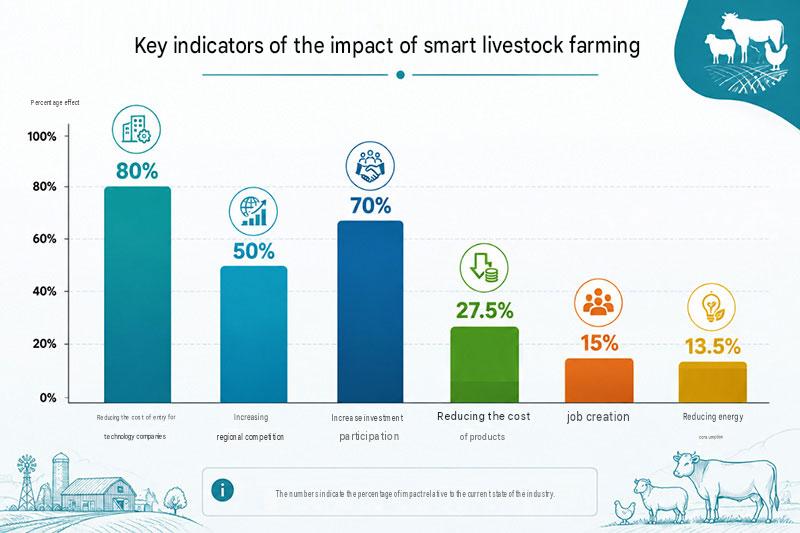
Based on internal modeling, pilot projects, and industrial benchmarking conducted throughout the development of this approach, the estimated benefits of implementing Smart Livestock Farming through phased deployment and integrated data management are as follows:

Indicator Estimated Improvement
Reduction in technology companies’ entry costs into the livestock industry Approximately ۸۰%
Increased competitiveness with regional countries Approximately ۵۰%
Increased investor participation in the livestock industry Approximately ۷۰%
Reduction in livestock production costs ۲۰–۳۵%
Employment growth (Data, IoT, and digital services ecosystem) Approximately ۱۵%
Reduction in energy consumption ۷–۲۰%

These figures demonstrate that Smart Livestock Farming can generate measurable economic and operational value while supporting the long-term digital transformation of the livestock sector.
 

Smart Livestock Farming

Conclusion

Iran’s livestock industry should not rely solely on expanding its physical production capacity. Instead, it should consider data infrastructure, the Internet of Things (IoT), and Artificial Intelligence (AI) as strategic components of its national and industrial development agenda.

Creating standardized and integrated data infrastructures enables technology companies, investors, researchers, and livestock producers to collaborate within a common ecosystem. This ecosystem will accelerate innovation, improve productivity, enhance product quality, reduce production costs, and strengthen the international competitiveness of Iran’s livestock industry.

Smart Livestock Farming is not simply a technological trend—it is a strategic necessity for building a sustainable, competitive, and data-driven livestock industry.

What Were the Consequences of the Shutdown?


The economic impact of internet shutdowns can be analyzed from several different perspectives.

۱. From the Perspective of Everyday Businesses

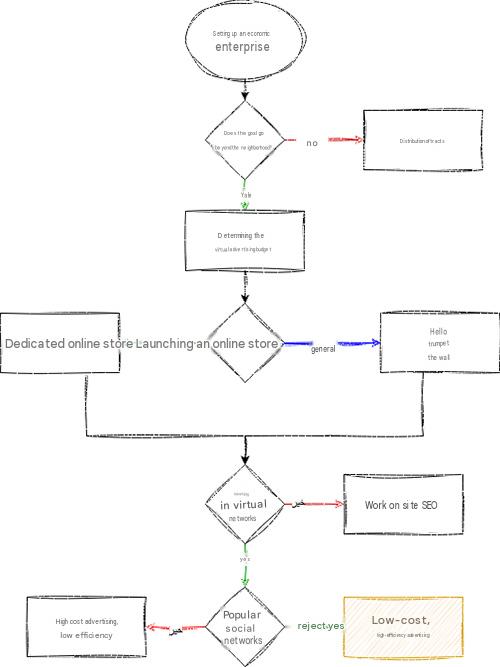
For a variety of reasons—including lower operating costs, increased market reach, and higher sales—many retail stores and small businesses have gradually embraced e-commerce and digital business models.

If we consider the following model to represent approximately ۹۰% of the general consumer economy, it becomes clear that internet-related spending has become a normal part of both household and business budgets.

In today’s digital economy, consumers and businesses alike allocate a portion of their financial planning to online commerce. As a result, although digital trade has become deeply integrated into everyday economic activity, prolonged internet shutdowns disrupt carefully planned business operations, interrupt online sales channels, reduce customer engagement, and create uncertainty for businesses that depend on digital platforms.


Although allocating part of the household budget to e-commerce has become a common practice, internet shutdowns can quickly disrupt carefully planned business strategies and consumer spending patterns, creating uncertainty for both businesses and customers.


۲. From a Macroeconomic Perspective

To understand the broader economic impact, it is essential to examine Chapter 13 of Iran’s Seventh Five-Year National Development Plan, which sets a target for the digital economy to account for 10–۱۵% of the country’s GDP by the end of 2028 (1407 in the Iranian calendar).


What Were the Consequences of the Shutdown

Even before internet disruptions, achieving this objective faced numerous obstacles, including budget imbalances, energy shortages, limitations in digital infrastructure, and challenges within the banking sector.

However, following a ۱۰-day nationwide internet shutdown in February 2026 (Bahman 1404), the sector experienced another major setback. According to the Deputy for Digital Economy at Iran’s Ministry of Information and Communications Technology (ICT), the digital economy’s contribution to GDP declined from ۴.۷۲% to approximately 4%.

Undoubtedly, the occurrence of two military conflicts and various social events during the same year also affected Iran’s economy. Nevertheless, prolonged internet disruptions significantly reduce the country’s ability to achieve the digital economy targets outlined in its national development strategy.


۳. What Were the Consequences of the Internet Shutdown?

The consequences of the internet shutdown can be examined from several different perspectives.

a. From the Perspective of the General Economy

It is well known that, for various reasons—including reducing costs and increasing sales—most stores and businesses have gradually shifted toward the modern world of e-commerce.

If we consider the following model to represent ۹۰% of the public economy, it becomes evident that, in today’s digital economy, internet-related expenses have become an integral part of household and business budgets.


What Were the Consequences of the Shutdown


As a result, despite the fact that the culture of allocating a budget for e-commerce has become deeply rooted among the general public, an internet shutdown can easily disrupt carefully planned financial and business strategies.


b. From the Perspective of the Macroeconomy

To better understand this issue, we should refer to Chapter 13 of Iran’s Seventh Five-Year Development Plan. According to this national development plan, the digital economy’s share of GDP is expected to increase to ۱۰–۱۵% by the end of the Iranian year 1407.

Even before the shutdown, this sector faced numerous challenges, including budget imbalances, energy shortages, data center limitations, and banking-related issues.

However, following the ۱۰-day internet shutdown in Bahman 1404, the sector experienced another major setback. The Digital Economy Department of the Ministry of Information and Communications Technology announced that the digital economy’s contribution to GDP had declined from ۴.۷۲% to approximately 4%.

Undoubtedly, the occurrence of two wars within a single year, together with the social events of 1404, created numerous economic challenges for the country. Nevertheless, a prolonged internet shutdown would significantly reduce the likelihood of achieving the objectives outlined in the Seventh Development Plan.


c. From the Perspective of the Knowledge-Based Economy

When we examine the defining characteristics of knowledge-based companies—namely innovation and advanced technology—we realize that these organizations, despite their delicate structure, are continuously pushing the boundaries of a technology-driven economy.

Unlike many traditional industries, operational stability is the primary requirement for knowledge-based companies, while capital is only the second critical factor.

Another important point that often receives little attention is that establishing a successful knowledge-based company may take up to a decade. Even if sufficient funding and a stable business environment exist, the highly skilled individuals capable of implementing innovative ideas may no longer be available.

Like other segments of the digital economy, knowledge-based businesses were severely affected by the internet shutdown. Companies that had previously managed to survive despite numerous challenges, thanks to a relatively stable operating environment, suddenly found themselves deprived of one of their most essential resources—the internet. As a result, many moved from a fragile position toward potential collapse.

It is also worth noting that, despite the increasing number of knowledge-based companies, the contribution of knowledge-based products to Iran’s GDP has declined to ۰.۵۵%. This is largely because most newly established companies operate in software and information technology, sectors that rely heavily on internet connectivity as a fundamental production resource.

Overall, it can be argued that repeated internet shutdowns may significantly delay Iran’s progress and competitiveness in the development of a knowledge-based economy.


d. Who Were the Winners?

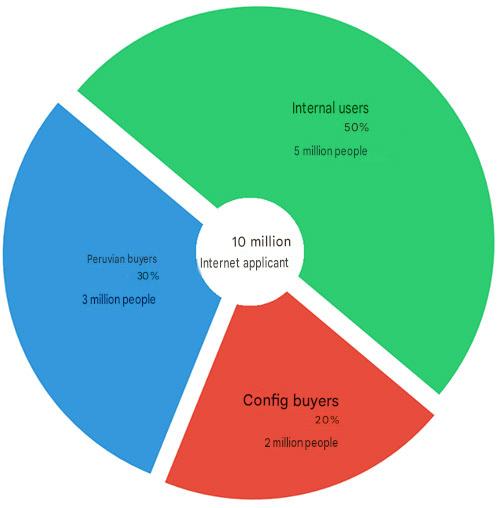
Since obtaining accurate and up-to-date statistics in Iran is often difficult, let us make a simple estimate based on ۱۰ million internet users. Even a rough calculation produces some remarkable figures.

  • Internet Pro entered the market relatively late but reportedly captured around ۳۰% of users, generating an estimated revenue of ۵ Hemmat.
  • Assuming that approximately ۲۰% of users turned to configuration (Config) services, vendors in this market are estimated to have earned between ۱۰ and 18 Hemmat.
  • Assuming the remaining ۵۰% migrated to domestic platforms, those platforms are estimated to have generated between ۴ and 6 Hemmat in additional revenue.

Although these figures are unofficial and based on rough estimates, they provide a useful perspective on who may have benefited economically from the internet shutdown.

What Were the Consequences of the Shutdown


e. A World That Did Not Wait for Us

Technological progress is advancing at an extraordinary pace. During the very three months in which we were waiting for domestic networks to return to normal and struggling to send even a simple email, the global technology landscape experienced major developments.

  • Anthropic introduced the Mythos model, an AI system capable of identifying and analyzing a significant portion of cybersecurity vulnerabilities across digital platforms.
  • OpenAI released GPT-5.5, a far more powerful and faster AI model that is expected to drive another major wave of technological innovation.
  • Alibaba launched its advanced Qwen 3.7 Max model, which officially reached the fifth position among the world’s leading AI models within just three months.


Conclusion

In conclusion, one cannot help but wish that the knowledge-based economy had an independent international governing body—similar to FIFA in the world of football—that could shield technological innovation from political influence and allow it to develop solely on the basis of science, innovation, and fair competition.


From Traditional to Smart (The Dawn of the Fourth Industrial Revolution in the National Livestock Industry)

Read more …

Smart Livestock Farming: The Ultimate Solution for Reducing Costs and Increasing Profitability in the Livestock Industry

Read more …

Achieve Lower Costs and Higher Profits with “Smart Livestock Farming“


Read more …

Smart Livestock Farming in Iran: An Analysis of Survey Results on Smart Equipment and Software


Read more …

Smart Livestock Farming Solutions (Part 2)

As previously mentioned, understanding the industry as an introduction can lead to precision in movement. In the second part of the report, we will continue to understand and try to study the structure of livestock farms further.

If you are interested in participating in the discussions, call +989131026235. Send a message on WhatsApp or Telegram.

Read more …

Analytical review of smart solutions in poultry farms


Overview:

Considering the significance of Artificial Intelligence (AI) in structuring various aspects of management, and given the country’s informational needs for training AI models, the establishment and flow of information in laying hen farms, similar to dairy farms, were included in the review objectives of Modiran Company. Further along this path, and to analyze the readiness status of poultry farms regarding the implementation of intelligent systems, a questionnaire was prepared for this purpose in Farvardin 1404 (according to the Iranian Solar Hijri calendar) and widely distributed. This report analyzes the results obtained from the questionnaire, and we hope it will serve as an introduction to the digital transformation in this industry.

Read more …

Smart Livestock Farming Solutions (Part 1)


and given the country’s information needs for training artificial intelligence models, generating information flow was among the primary goals of the Smart Animal Husbandry Committee (in the Knowledge-Based Association).

Read more …

Smart Livestock Farming: A New Step Toward Optimization and Profitability

Smart livestock farming, leveraging advanced technology, plays a crucial role in improving production processes, reducing costs, and increasing efficiency. This method combines data, information processing, and precise decision-making to enable more effective management. In this article, we explore the concepts, components, and objectives of smart livestock farming.

Read more …

More Articles …

  1. Modelling the cost price of fetal through Modiran company for the first time
  2. Embryo transfer through Ovum Pick Up method (OPU) in cattle (Part II)
  3. Approaches for Improvement of Herd Pregnancy Rate (Part II)
  4. Designing a computational model of the cost price of small-scale livestock via the Modiran company
  5. Determining the most appropriate age of replacement for dairy cows
  • Start
  • Prev
  • 1
  • 2
  • Next
  • End

Contact Us

Phone Central Offic

+98  - 31 - 34401393
 +98  - 31 - 34401105

Direct contact

0913 - 102 - 6235


تبلیغات (2)

Modiran Co. of programming and documentation specialized service provider husbandry and other companies, organizations and institutions


سلام! برای چت در واتس اپ روی یکی از کارشناسان ما در زیر کلیک کنید و یا از طریق ایمیل زیر با ما در ارتباط باشید info@m88.ir

کارشناس فروش نیلفروش
پشتیبان نرم افزار -
گفتگو با کارشناسان ما
Close and go back to page

Prepared and organized by Hodaeian
All rights of this website belong to Modiran Group